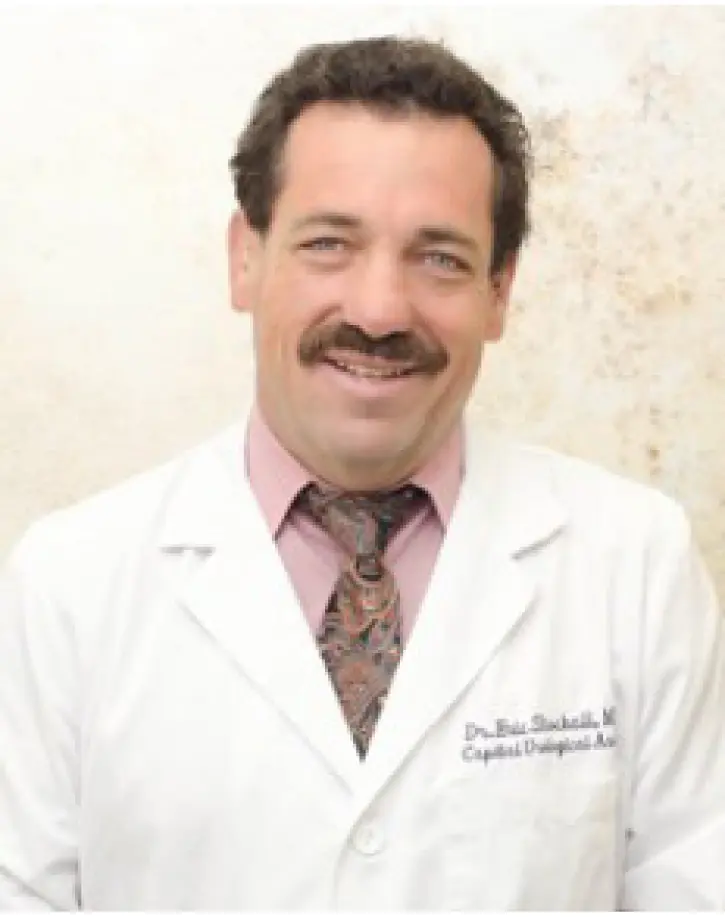
Hillsdale Hospital in partnership with Capital Urological Associates brings expert urology care with innovative technology to Hillsdale. With the most advanced tech and top-notch providers, you are receiving the best quality care for your urological health needs. From kidney stones to urinary incontinence, the urology team at Hillsdale Hospital and Capital Urological Associates can help.
Our highly trained team of healthcare providers embrace technology and strive to maintain the most cost-effective, efficient and highly-unique treatment plan for each individual situation. Common conditions include:
- Urinary Incontinence
Urinary Incontinence, or the loss of bladder control is very common in men and women. Although it occurs more often as people get older, it is not the only reason. Pregnancy, childbirth, menopause, hysterectomy, enlarged prostate, prostate cancer and certain neurological disorders are all a cause. If urinary incontinence affects your daily activities, contact us to help regain your quality of life. - Kidney Stones
Kidney Stones are hard deposits made of minerals and salts that form inside your kidneys. Kidney stones can be painful when they move around your kidneys and pass into your ureters. If you feel pain severe enough you can’t sit still, have blood in your urine, difficulty passing urine or the pain is accompanied by nausea, vomiting, fever or chills contact your doctor. If you have a history of kidney stones there are several things we can do to help with future issues. Hillsdale Hospital is the first location in the state of Michigan and one of only six in the United States to offer Thulium Laser Lithotripsy for kidney stones. Click here to learn more! - Prostate Cancer
Prostate cancer is cancer that occurs in the prostate of men. It is one of the most common types of cancer and with early detection prostate cancer is highly treatable. There are several factors that play a role in prostate cancer such as age, race, family history, and obesity. Treatments range from monitoring slow growing prostate cancer to surgery for faster growing prostate cancers. We suggest having a conversation with your physician to decide what direction including PSA testing is right for you. - Bladder Cancer
Bladder Cancer is a common type of cancer that begins in the cells of the bladder. It is usually caught in the early stages and is highly treatable. Symptoms may include, blood in the urine, frequent and painful urination and back pain. If you notice any of these symptoms contact your doctor. - Benign Prostatic Hyperplasia (BPH)
BPH, also called prostate gland enlargement is a common condition as men get older. BPH can cause uncomfortable urinary symptoms. Symptoms can include frequent and an urgent need to urinate, increased frequency of urination at night, difficult starting urination, weak urine stream and the inability to completely empty the bladder. There are several effective treatments including medication, minimally invasive therapies and surgery. If you are having urinary problems, discuss them with your doctor. Hillsdale Hospital offers UroLift™ to treat BPH. Read more about the UroLift™ System below.
How The UroLift™ System Works
The UroLift™ System procedure can be performed as a same-day outpatient procedure, including the office setting, under local anesthesia.1 Patients typically return home with no overnight stay and no catheter required after treatment.2 Here’s how it works.

An enlarged prostate can narrow or even block the urethra
Step 1
The UroLift™ Delivery Device is placed through the obstructed urethra to access the enlarged prostate.
Step 2
Small UroLift™ Implants are permanently placed to lift and hold the enlarged prostate tissue out of the way.
Step 3
The UroLift™ Delivery Device is removed, leaving an open urethra to improve flow and provide lasting BPH symptom relief.
Lithotripsy with the Thulium Fiber laser is a non-invasive treatment for kidney, uretal and bladder stones for eligible patients. It offers a lower risk of intraoperative bleeding and results in shorter hospitals stays and less time with a catheter post-procedure.
Here’s how it works:
- The urologist passes a scope into the tubes of the urinary tract without making incisions.
- The laser breaks up the stones by fragmenting them into very fine particles with no retropulsion—meaning the laser provides an inherent stone stabilizing effect so the stone doesn’t move around during the procedure.
- It coagulates any bleeding (hemostasis), providing a safer experience for the patient.
- The patient can then pass the stone fragments in the urine.
Because the laser is optimized to a stone’s chemistry, it can fragment or dust two times faster than other lithotripsy and with less power. It can also incise and ablate soft tissue, like tumors or prostate.